
This article is based on first-hand attendance at Brighton SEO 2026 and post-event responses collected from attendees including SEO consultants, in-house SEO leads, agency specialists, content strategists, and founders. Responses were collected after the event and edited only for clarity.
TL;DR
Brighton SEO 2026 was worth attending, and 99% of respondents said they would go back. Networking and roundtable discussions were rated more valuable than formal sessions by most people. AI dominated the agenda but felt repetitive: around 80% of respondents named it the most overhyped topic, not because AI does not matter, but because the conversations rarely went deep enough. The talks that landed best brought specific examples, real data, and actionable frameworks. The gaps people felt most were career development, deeper measurement thinking, and practical agentic SEO workflows. If you are considering going: book roundtables early, keep your schedule loose, talk to strangers, and treat the conversations around the event as seriously as the sessions themselves.
Key findings
• 64% of respondents named AI the most overhyped topic at the event
• Networking was the top reason for attending at 39%, beating out speakers (29%), industry trends (14%), and learning new skills (14%).
• 99% said yes when asked if they would attend again
• AI and Search was the most valued track at 32%, followed by Technical SEO at 25%: the topic isn’t dead, but the delivery needs work.
• Career development and personal growth emerged as the biggest gap, with multiple attendees calling for more talks on mental health, career progression, and business skills.
• Tool promotion disguised as talks was a recurring frustration, with several attendees calling out sessions that were essentially 20-minute sales demos.
• Women in Tech SEO was mentioned unprompted by multiple respondents as a highlight of the experience.
There is a particular kind of anxiety that comes with attending a big industry conference for the first time.
You do not know the layout. You do not know the social rules. You do not know if you will be the person standing awkwardly by a pillar, or the one who somehow ends up in three important conversations before lunch. You just know that everyone else seems to know what they are doing, and you are desperately hoping you will leave with something real.
That was me walking into brightonSEO 2026.
The questions keeping me up at night were not the abstract ones (honestly, “will AI replace SEOs?” bores me at this point). I wanted to know what practitioners were actually doing with AI. What was working in real client accounts, under real deadlines. Not the LinkedIn posts. The actual work.
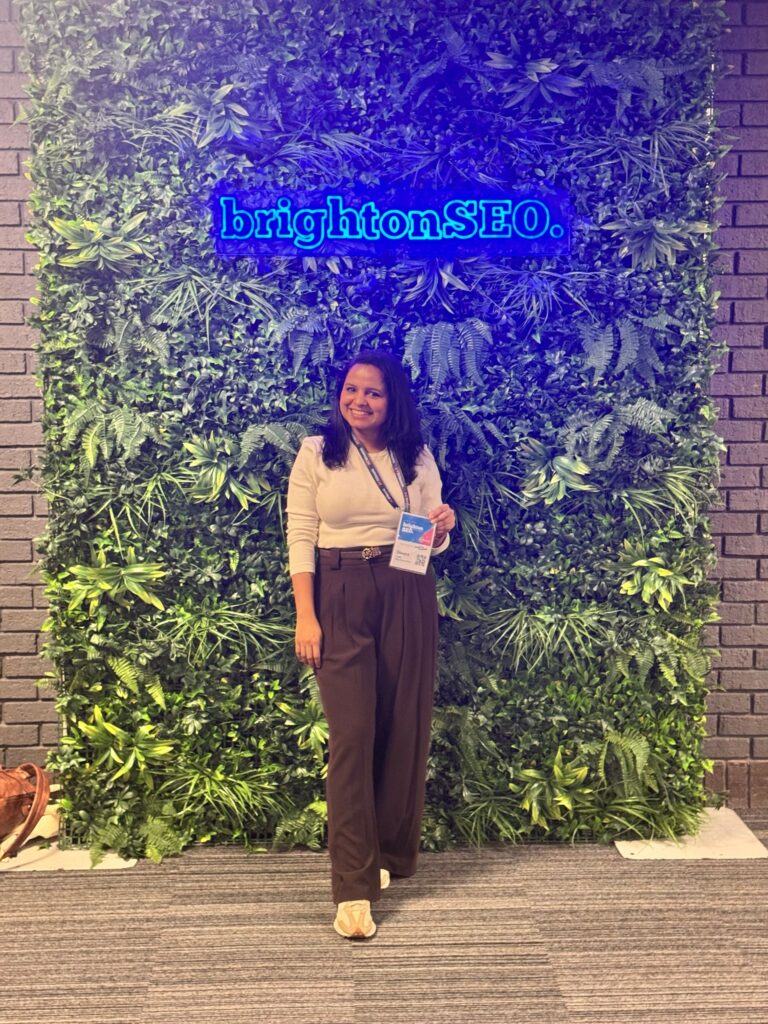
I got my sponsored ticket through Women in Tech SEO, a community led by Areej, Erin, and Himee, which I am genuinely grateful for. It was my first time, and I attended both days. What I found surprised me – I talked to people I’d only ever known as LinkedIn avatars. If you’d also like to earn a scholarship ticket, join the community and reach out to them before the event, you might just win one!
But my experience is just one data point. So, I did what any slightly obsessive content person would do: I reached out to fellow attendees after the event and asked for their honest take. People responded, including SEO consultants, in-house leads, agency specialists, content strategists, founders, and paid media specialists. What came back was more nuanced, more honest, and more useful than any official recap.
What Brighton SEO actually is (before we go any further)
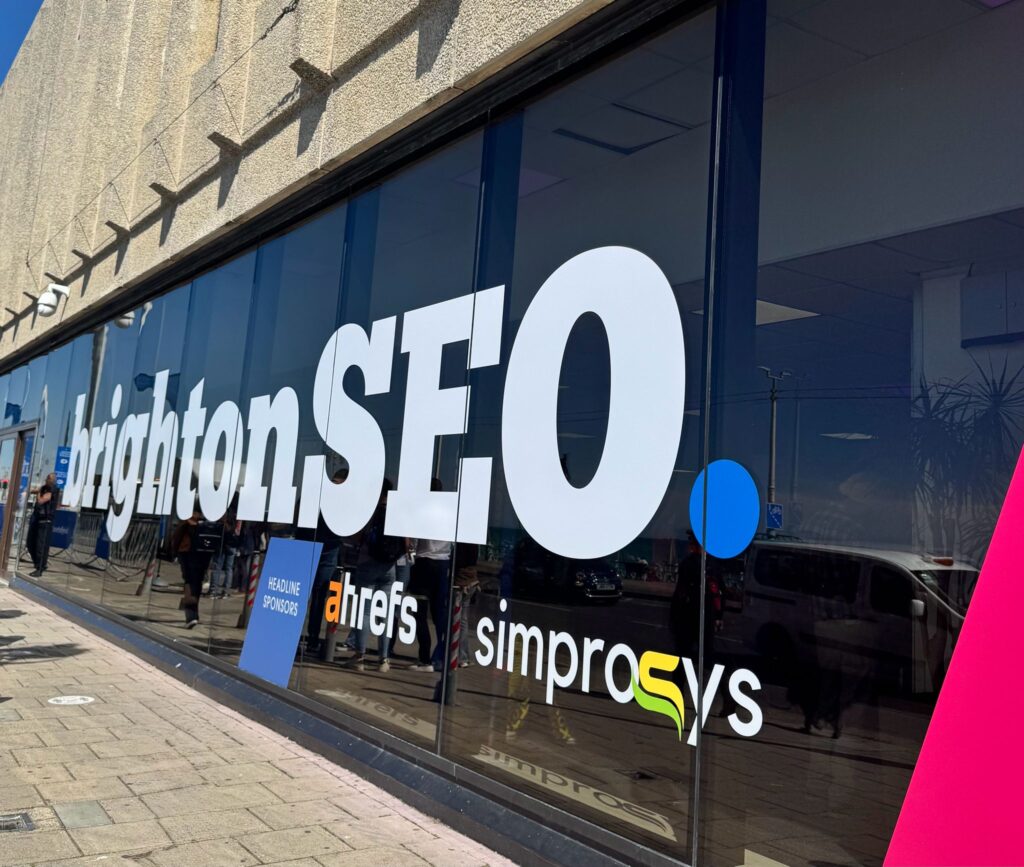
Brighton SEO is a twice-yearly digital marketing conference held at the Brighton Centre on the south coast of England. It brings together thousands of SEO professionals, paid media specialists, content strategists, digital PR practitioners, and marketers from across the world for two days of talks, roundtable discussions, workshops, and networking.
It is not a polished corporate event. It is deliberately accessible. New speakers get a platform alongside well-known names. Sessions run across multiple simultaneous tracks, which means you will always miss something. The networking floor is loud and busy. The city itself: walkable, coastal, genuinely beautiful, becomes part of the experience.
Brighton SEO isn’t just a conference anymore. It’s a temperature check on where our entire industry is heading.
Who should attend Brighton SEO?
Brighton SEO is broad in who it serves well. Based on the respondent group and two days in the room, here is who gets the most out of it:
- SEO professionals at any level. Juniors get industry exposure. Seniors get honest peer conversation.
- Freelancers and consultants. If you work alone most of the year, two days with people who get it is a reset.
- In-house SEO leads. The roundtables are where the real value is. Everyone in that room is fighting the same battles.
- Content, digital PR, and paid media specialists. Dedicated tracks for all three. It is broader than it looks.
- Agency professionals and founders. Tactical sessions, peer networking, and a ground-level view of where the industry actually is.
Anyone working in the digital marketing space. Brighton SEO covers SEO, content, digital PR, paid media, AI search and Tech under one roof. If your work touches any of these, there is a track, a roundtable, or a conversation here for you.
What to actually do at Brighton SEO
This section is specifically for people attending for the first time, or considering it. Based on the survey responses and my own experience, here is the practical version.
Before you arrive
• Book your hotel in Brighton itself, not further out. The city is the experience as much as the venue.
• Look at the full track listing in advance. Multiple parallel sessions run at the same time; you will need to make choices. Accept the FOMO now.
• Register for roundtables the moment they open. They fill up fast and consistently come out as the highest-value format. This is not negotiable.
During the event
• Keep your schedule looser than you think you need to. The conversation you have in the corridor instead of a session might be worth more.
• Talk to strangers. Brighton SEO is genuinely one of the more approachable events in the industry. Say hello. Ask what people are working on. Most people are there precisely because they want to connect.
• Check the exhibitor floor with intention, not obligation. Some of the most interesting tools are being demoed there; others are pure sales. Bring your critical thinking.
• If you feel overwhelmed by day two, skip a session and decompress stated by Pavani Konduru, SEO Manager at Chemist4U.
Outside the conference
• Leave your evenings free. BrightonSEO post conference events, pub meetups, and spontaneous dinners are where relationships form.
• Chima‘s Sip and Search was cited by Catrinel Ciplea as ‘genuinely fun and insightful.’ Look for events like it.
• The Brighton seafront, the Lanes, and the pub culture are part of the experience. Do not spend the whole two days inside the Brighton Centre.
When you get back
• Watch the recordings of talks you missed. They are usually made available after the event. One attendee specifically mentioned planning to share recordings with teammates who could not attend.
• Follow up with the people you met within a week, while the conversations are still fresh.
• Write down your three most actionable takeaways before the week is out.
What happened during Brighton SEO 2026
The one thing almost everyone agreed on: AI was everywhere, and mostly repetitive
Before getting into the nuance, here is what came through loudest and clearest from everyone who filled in the form.
Almost universally, AI was named the most overhyped topic at Brighton SEO 2026. Not because AI does not matter; it does. But because the way it was being discussed felt repetitive. The same surface-level themes. The same claims are dressed up in new slides. Session after session circling the same territory without going deeper.
“AI was everywhere at Brighton SEO 2026, but sometimes it felt like we were using a new buzzword to describe old SEO problems.” quoted by Bengu Sarica Dincer, SEO Manager, Designmodo
“Some were useful, but a lot of them repeated the same ideas around AI overviews, LLM optimisation, and ‘search is changing. After a while it started to feel like different versions of the same talk.” shared by Chidinma Yvonne Egwuogu, SEO and Content Specialist
“Mass AI content production without enough discussion around reputation, retrieval trust, user satisfaction, and whether AI search systems will continue rewarding volume over genuine authority long term.” shared by Ana Precup, ECOMM SEO Consultant, Deby Digital
That is not a criticism of AI as a topic. That is a maturity signal. The SEO community has moved past the ‘AI is coming’ phase. They want the ‘here is what we did about it’ phase. And Brighton SEO 2026, by most accounts, was not quite there yet.
Notably, not everyone agreed.
Emma Moletto, SEO Specialist at Mavriq, who spoke at this Brighton SEO for the first time, had a more optimistic reading “The level of maturity around AI was overall higher. Less surface-level hype, more thoughtful conversations about tests, workflows, and what this shift actually means for how we work.The difference in perspective may come down to which sessions you happened to be in.”
What people actually loved:
1. Networking
Here is what surprised me most from the responses: when asked what was most valuable about Brighton SEO 2026, 45% people mention networking and the people.
Jolle Lahr-Eigen, SEO Consultant, Wingmen Online Marketing shared “The real magic was everything around the talks. Brighton: walkable, right on the shore, nice weather! The right crew to drift in and out of sessions made the whole thing. Women in Tech SEO meet and greet, FCDC event, spontaneous pub conversations and dance moves: that’s where the actual value compounds. Keep your calendar loose and enjoy!”
Sarah McDowell, Freelance Podcast Producer and Digital Marketing Consultant, Lyrebird Studios mentioned “For me it’s more about the networking. Catching up with friends, and meeting new people.”
Judith Lewis, Director, Decabbit Consultancy shared “The connections that we make at Brighton SEO are the most valuable. Go to the pub and say hello to someone with a badge and just network the heck out of the event. You’ll make connections that will last the rest of your life.”
For people who work alone: freelancers, consultants, solo SEOs; this is not a small thing. Isolation is one of the least-discussed costs of independent work. Having two days surrounded by people who understand what you do and care about the same things is genuinely valuable, even when you cannot measure it in a spreadsheet.
2. The roundtables
If there is one specific format that came up as a consistent highlight across the responses, it is the roundtable discussions.
Sofie Koevoets, Organic Search and SEO Lead, at Homedeal shared “At the round tables I made real and valuable connections from which I learned a lot. We all seem to be grappling with AI, how to report on its search performance seems to be a bit of a black box for everyone.”
Sofie also captured the tension playing out on the networking floor: there was no shortage of companies claiming they had cracked LLM reporting. The roundtables were the antidote: honest acknowledgement that this is still genuinely hard.
Lydia Fox, Head of SEO, Serpify “Hearing many different perspectives on a topic rather than just one voice really gives a larger industry perspective.”
That is the key difference between a roundtable and a talk. A talk gives you one perspective. A roundtable gives you fifteen perspectives from practitioners dealing with the same challenges in different sectors, different budgets, different clients.
Practical note: Roundtables fill up quickly. Register for them the moment they open. Multiple respondents flagged this.
3. The talks
Despite the frustration with AI repetition, there were sessions that respondents mentioned specifically and enthusiastically.
Angie Aiken, Head of SEO, noted the shift in tone this year: “It was great to see the change in mindset from ‘AI is scary and coming to take our jobs’ to ‘I love using AI to make me better at my job.” Dr Pete Meyers‘ Friday keynote, and his introduction of Google Web Guide, was the talk she was most excited to take back.
One of the Anonymous attendee,Senior SEO Manager shared “I did like some of the more actionable examples that speakers used, especially Dr Pete with his examples about tea, showing how he’s identifying intent and uncovering new topic potentials. Even though I work in SaaS, I saw how I can use that line of thinking.”
Jolle Lahr-Eigen gave detailed credit to several sessions: Tom Winter stood on stage and told people their content process is aspirational fiction at best, then made a compelling case for AI agents that actually enforce the research steps humans skip under deadline pressure. Greg Fletcher on product discovery for AI agents was described as the most forward-looking session I saw: enriching merchant data with real-world use cases from reviews and forums so AI shopping agents can actually give good answers.
Dave Cousin, Founder at Dave the SEO and Co, singled out Valentine Jahan as his Thursday standout and called Laura McInley‘s no-clicks talk “one of those talks I wish I’d thought of doing myself.” Laura and Janaina Barreto-Romero both tackled the measurement crisis head-on, reframing LLMs as a discovery channel and giving attendees concrete language for client conversations.
Laura Iancu, Founder of Searchpedia, was particularly enthusiastic about Aleyda Solis‘s approach to measuring AI presence, and was already planning to implement it the following week.
The pattern in what people loved most: real examples, real data, real implementation. Not theory.
The frustrations worth naming honestly
This came through in enough responses that it is worth addressing plainly. A meaningful number of attendees felt that some sessions functioned more as product demos or self-promotion than genuine education.
Veronika Holler, Head of Demand Generation, Tresorit shared “This time I noticed that quite a lot of talks felt more like promotion for someone’s tool or for themselves. It didn’t feel that way in the past.”
Rositsa Baneva, Head of SEO at Sprintax, flagged AI visibility tracking as the most overhyped topic, partly because the tools claiming to solve it were not yet mature enough to justify the confidence behind the pitches.
This is a structural tension in any conference that gives new speakers a platform. Brighton SEO does this deliberately, and it is one of the things that makes it accessible and community-driven. Some sessions will miss. Go in knowing that.
The topics people wished had been covered
The gaps people identified are a useful signal about where the industry’s real anxieties sit right now.
Bo Verheyden, SEO Team Lead, Us mentioned “The industry is craving less ‘AI will change everything’ and more: ‘What have you actually tested? What failed? What scaled?’“
Leanne de Araujo, Web Analyst at Calmer Copy, shared that the self-development room came closest, with talks that gave her genuine clarity on her freelancing direction.
Sarah McDowell and Judith Lewis, both called out the same gap: more talks on career development, mental health, personal growth, and career progression.
Bengü Sarıca Dinçer and Rositsa Baneva both flagged measurement and tracking as the biggest gap. Clicks are down. The old KPIs are harder to defend. The practitioners who learn to tell that story clearly are going to be the ones clients keep.
Thomas Peham (OtterlyAI) and Chidinma Yvonne Egwuogu both wanted the same thing: real agentic SEO workflows. How practitioners actually use agents day-to-day, not the theory. That conversation was largely missing.
Catrinel Ciplea and Gintare Rimolaityte both flagged the same gap: search expanding beyond Google into YouTube, TikTok, Instagram, and Reddit. The multimodal search reality was underrepresented for the size of the audience already dealing with it.
Laura Iancu, Founder of Searchpedia, had one ask: more International SEO.
The Women in Tech SEO thread running through all of this
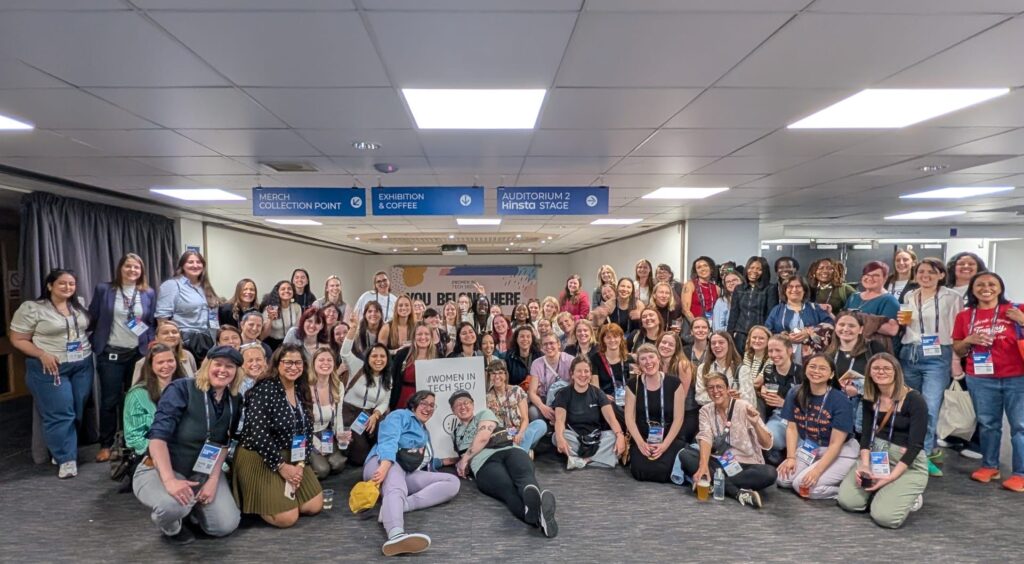
Multiple respondents mentioned Women in Tech SEO without being asked. Not as a footnote, but as something that genuinely shaped their experience.
Hannah Smith, Head of Content, WTS mentioned “I love coming to Brighton SEO: the standard of the talks is excellent, I get the chance to catch up with old friends and make new ones, plus the WTS meet and greet is always a highlight. Seeing so many folks from our community come together in person is an absolute delight.”
One respondent who attended on a sponsored WTS ticket was direct about what it meant: ‘Without their support, I would not have been able to go, and it was a truly wonderful chance to reinvigorate my passion for the industry.’ I can say the same. The sponsored ticket I received through WTS is what got me into the room. And that matters: not just for individuals, but for the kind of conversations the room is able to have when it includes people who would not otherwise have been able to afford to be there.”
Chidinma Yvonne Egwuogu, attending Brighton SEO for the first time: ‘The Women in Tech SEO community really stood out and made things easier.’ As a newcomer, that kind of anchor matters more than anyone who has been going for years might realise.
What Brighton SEO 2026 says about where SEO is heading
Here is my honest read, informed by the responses and two days in that room.
The industry has accepted AI. Now it needs to do the actual work.
The ‘AI is changing search’ phase is over. Everyone agrees. The phase we are now in; figuring out how to measure it, operationalise it, explain it to clients, and separate genuine advancement from vendor hype; is harder, messier, and more interesting. Brighton SEO 2026 was right on the cusp of that shift. Some sessions were ahead of it. Many were still catching up.
Measurement is the next real battle.
Clicks are down. Traditional KPIs are becoming harder to defend. But search is still driving revenue for many businesses; the problem is that the old frameworks no longer tell the full story. Many people are treating AI visibility as a brand-new discipline rather than an extra layer on top of the same fundamentals.
The conversation about brand trust is just getting started.
The more valuable discussions at this event were not about AI content at scale, but about why an LLM would trust your brand enough to mention it in the first place. That is a different problem, and one the industry is only beginning to develop frameworks for. Recommendability, not just rankability, is the direction of travel.
Community is becoming as important as content.
The warmth and openness of Brighton SEO is not accidental. It has been built deliberately over many years. And the fact that Women in Tech SEO meet and greet, side events like Chima’s Sip and Search, and spontaneous pub conversations keep coming up as highlights tells you something. As SEO becomes more complex and uncertain, a trusted peer network is not a nice-to-have. It is how people stay sane and stay current.
Tools people were most excited to try after the event
| Tool | What it is for |
| OtterlyAI | AI visibility tracking and myth-busting in AI search |
| SEOmonitor | Testing AI visibility strategies beyond rankings |
| Ahrefs AI | AI-assisted SEO research and competitive analysis |
| Profound | Marketing engineering workflows (Nick Lafferty’s training) |
| ocula.tech | AI search and visibility monitoring |
| Konvart | Conversion and SEO optimisation |
| Majestic | Backlink analysis and link intelligence |
| WAIKAY | AI-driven SEO insights |
| Transparent.ai | AI content transparency tracking |
| Writesonic | AI content creation |
| Google Web Guide | Introduced by Dr Pete Meyers; navigate Google’s own documentation |
On the tactic side: AI presence measurement, stakeholder management frameworks (particularly for making the case for SEO budget against paid), server log analysis, prompt analysis for reengineering long-tail queries, and forum-driven content strategy for LLM visibility. The common thread is what excites people most: things that are practical, testable, and specific. Not the hype. The actual next step.
Final verdict
Brighton SEO 2026 is worth attending. That is the short answer.
The longer one is this: go in knowing what it is and what it is not. It is not a tightly curated programme where every session will be exceptional. It is a community event that happens to have talks running through it, and the community is the point. The roundtables, the corridor conversations, the pub evenings, the spontaneous connections: these are not the warm-up acts. For many attendees, they are the headline.
On the content side, the AI fatigue is real and worth acknowledging. If you are hoping for deep, specific, data-backed guidance on how to operationalise AI in your SEO work, you will find some of it at Brighton SEO; but you will have to look for it. The surface-level sessions are there too, and you will need to choose your tracks carefully.
Here is what stands out: the overwhelming majority of people who responded said they would definitely attend again. Not one person said no. Even respondents with genuine criticisms: about repetition, about sales-pitch talks, about schedule clashes; said they would be back.
That is not the response you get from a mediocre conference. That is the response you get from one that has built something real.
Frequently Asked Questions: what Brighton SEO 2026 attendees actually said
These questions come directly from the survey form fields. Answers are based on real responses, not generalised advice.
What was the most overrated or overhyped topic at Brighton SEO 2026?
AI. Around 80% of respondents said so. Not because it does not matter, but because the execution was shallow: same arguments, repeated across sessions, with little real data or honest failure-sharing. Jolle Lahr-Eigen called out llms.txt as “sold as a must-do quick win” with thin evidence. Angie Aiken was more blunt: “LLMs and AI Agents don’t replace humans… we know!!” The outlier: Emma Moletto found the AI conversations more mature than expected. Quality varied by session.
Which track was most valuable to you?
AI and Search was the most-cited most-valuable track, despite also being the most-criticised for repetition. Technical SEO came second, with multiple respondents naming it as where the most actionable content lived. Content and Paid Media were both named by several respondents, and it is worth noting that the Paid Media track (including HeroConf content) was specifically highlighted by Ayisha Yousef, Sarah Sal, and Boluwa Olojo as a highlight: an angle the main conference narrative often underplays. The Digital PR and Social Media tracks also had enthusiastic individual responses.
Would you attend Brighton SEO again?
The overwhelming majority said definitely yes. No respondent said no.
Credits
This article exists because a group of generous people took the time to share their honest experience after a long two days. Thank you to each of them.
Credited contributors (alphabetical by first name):
• Ana Precup, ECOMM SEO Consultant, Deby Digital
• Angie Aiken, Head of SEO
• Ayisha Yousef, Founder / Growth Marketing, What Matters Media
• Bengu Sarica Dincer, SEO Manager, Designmodo
• Bo Verheyden, SEO Team Lead, Us
• Boluwa Olojo, Principal Consultant, TalentDistro
• Catrinel Ciplea, SEO Consultant (Freelance)
• Chidinma Yvonne Egwuogu, SEO and Content Specialist
• Dave Cousin, Founder / Consultant, Dave the SEO and Co.
• Emma Moletto, SEO Specialist, Mavriq
• Gintare Rimolaityte, CCO, Trendos
• Hannah Smith, Head of Content, Women in Tech SEO
• Jolle Lahr-Eigen, SEO Consultant, Wingmen Online Marketing
• Laura Iancu, Founder, Searchpedia
• Leanne de Araujo, Web Analyst, Calmer Copy
• Judith Lewis, Director, Decabbit Consultancy
• Lydia Fox, Head of SEO, Serpify
• Pavani Konduru, SEO Manager, Chemist4U
• Rositsa Baneva, Head of SEO, Sprintax
• Sarah McDowell, Freelance Podcast Producer and Digital Marketing Consultant, Lyrebird Studios
• Sarah Sal, Facebook and LinkedIn Ads Specialist, Sarah Sal Marketing
• Sofie Koevoets, Organic Search and SEO Lead, Homedeal
• Thomas Peham, CEO, OtterlyAI
• Veronika Holler, Head of Demand Generation, Tresorit
Few contributors chose to remain anonymous. Their insights appear throughout the article without name attribution.
This article was researched, compiled, and written by Shweta Gupta at Growwdigitaly. Always happy to talk SEO, content, and AI with fellow practitioners – say hello.
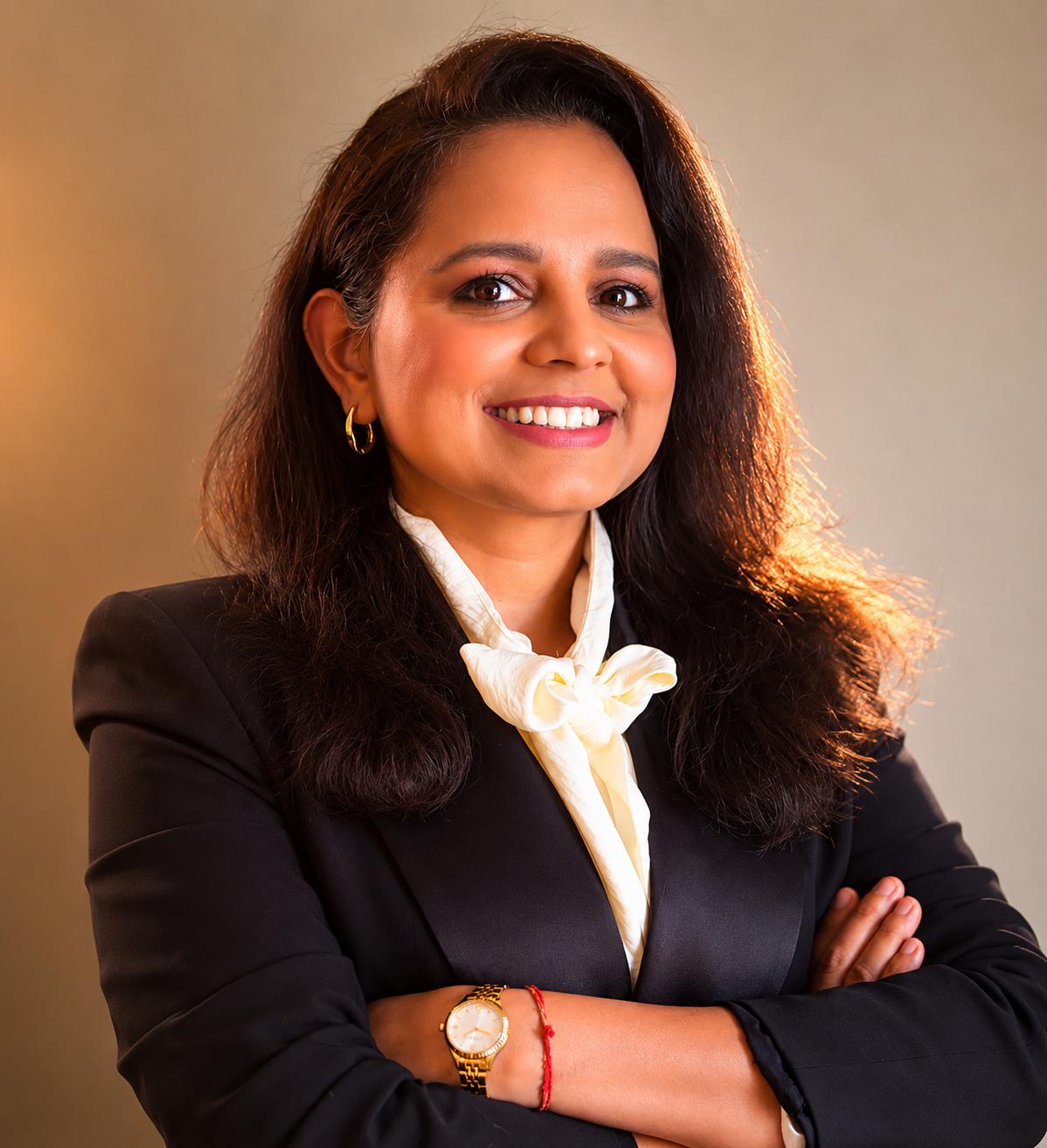
Shweta Gupta is a UK-based marketer specialising in SEO, content strategy, and AI-assisted marketing workflows. She has experience across SEO, paid media, content optimisation, website management, and digital marketing across various industries.